
The NeverRest Project presents the new update of its open platform EverData, expanding advanced environmental and tourism data on Mount Everest.
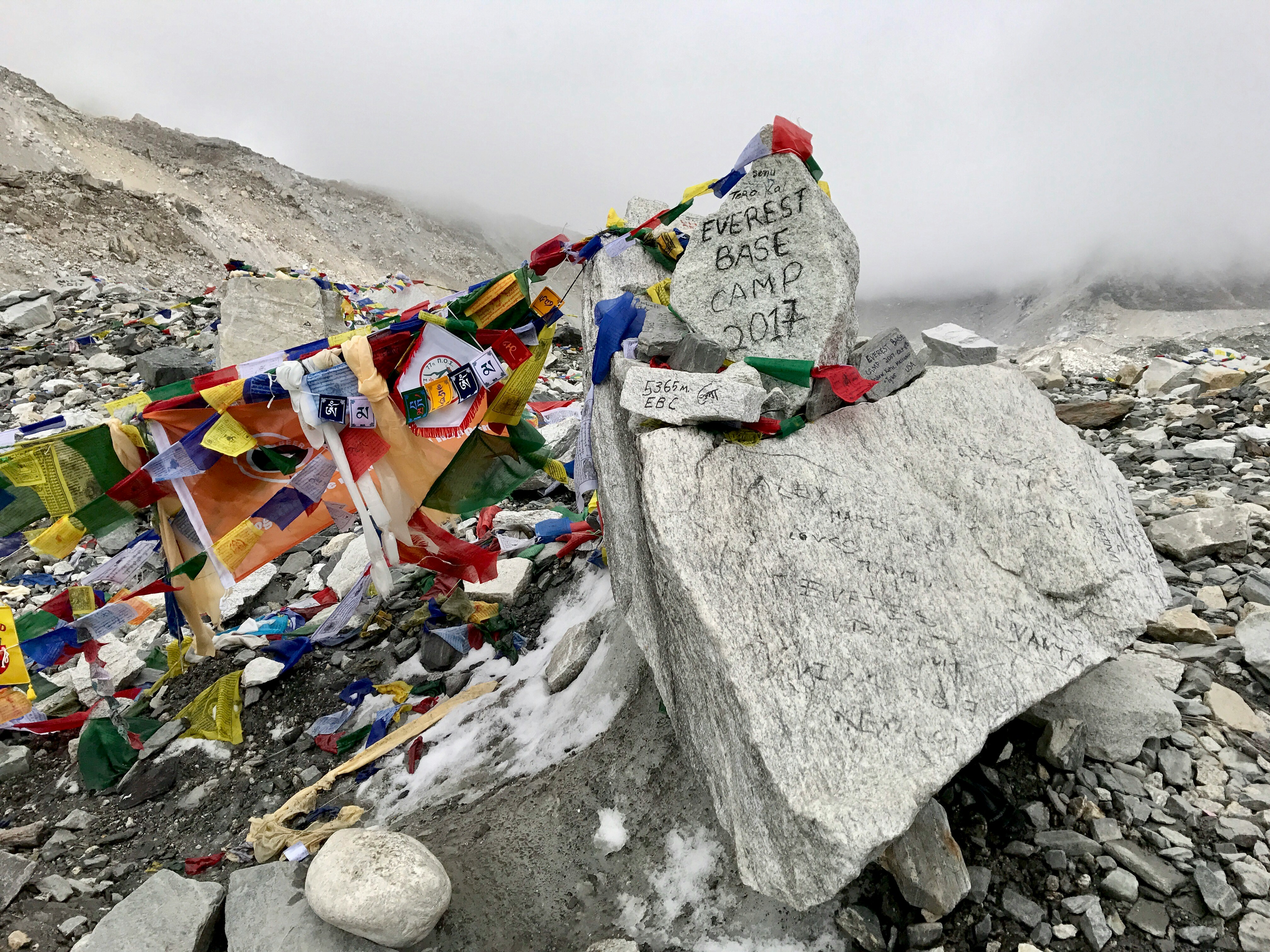
Barcelona / Kathmandu, March 21, 2025. This spring, approximately 240,000 liters of urine will be discharged on Mount Everest by clients and expedition teams participating in the climbing season on the world’s highest mountain. This breaks down to about 4,000 liters of urine per day being deposited on the Khumbu Glacier, next to Everest Base Camp, according to calculations from the new advanced version of the EverData platform by the environmental technology and engineering company The NeverRest Project, which is being launched today.
This is a figure worth noting, coinciding with World Water Day on March 22, which the United Nations has dedicated to raising awareness about the importance of glacier preservation, as “as global temperatures rise, our ice heritage is shrinking, and the water cycle is becoming more unpredictable,” causing “billions of people to suffer from the effects of changes in meltwater flows: floods, droughts, landslides, and rising sea levels.”


The Khumbu Glacier, near from Mount Everest.
If this season’s numbers are similar to last year’s—when 600 clients reached the summit, not including their support guides, logistics staff, and kitchen crews—between April and May, Everest Base Camp will become a city of about 2,000 people, including clients and support teams, who must ensure supplies and accommodations for all expedition participants.
Since high liquid intake is necessary for acclimatization, our calculations indicate that 4,000 liters of urine per day will be discharged onto the Khumbu Glacier—much of it containing high levels of medications used to cope with altitude sickness and other ailments—amounting to a total of approximately 240,000 liters of urine over two months. This is because there is no liquid waste disposal system at Everest Base Camp, nor at Camps II, III, or IV.
The CEO and founder of The NeverRest Project, Frédéric Kauffmann, commented on this advanced version of EverData, stating that: “You cannot protect what you do not understand. EverData gives us the ability to see Mount Everest like never before, with real data that allows us to take long-term action with awareness and responsibility.”
EverData update: A hub for valuable data
Given the need for high-quality data and information on the environmental impact of high-altitude tourism on Everest, The NeverRest Project is also presenting today the latest update of its EverData platform—a pioneering solution that consolidates the most significant official tourism and environmental data on Mount Everest in one place.
This includes information from the Nepal Tourism Board (NTB), the Sagarmatha Pollution Control Committee (SPCC), and the Himalayan Database, among other valuable governmental and academic sources.

One of EverData’s graphics uses color coding to show evolution and rise of temperatures on Everest between 1979 and 2022.
The new version of the platform allows anyone to access key information to analyze the Everest situation, such as a historical record of visitors and nationalities, the types of organic and inorganic waste generated or collected, the positive and negative impacts on the local population, the evolution of temperature and water quality over recent years, and many other parameters that help design preservation solutions for one of the world’s most fragile ecosystems while also improving the lives of local communities.
Agreement between The NeverRest Project and Cetaqua – Water Technology Center to analyze tourism’s environmental impact on Everest
The NeverRest Project has also signed an agreement with Cetaqua – Water Technology Center, a leading R&D network focused on developing and implementing solutions to address water-related challenges through research, scientific knowledge, and innovation. The aim of this collaboration is to achieve pioneering advances in analyzing the environmental impact of tourism on Everest.
This agreement is focused on promoting collaborative research, fostering environmental innovation, creating transformative solutions to address both current and future challenges, and developing sustainable technologies and practices that not only meet but establish new industry standards for environmental management.
Pedro Villanueva, head of Sustainability and Social Responsibility at Cetaqua, highlighted: “Digital technologies play a crucial role in resource management, as they enable rapid responses to potential scenarios and facilitate anticipation—essential for mitigating climate change impacts and increasing territorial resilience. That is why we are bringing Cetaqua’s expertise and digital knowledge to this project and to local organizations, with the goal of providing specific, long-term sustainable solutions for a particularly fragile environment like Everest.”
Kauffmann added regarding the agreement: “Thanks to our collaboration with Cetaqua, EverData not only collects data but transforms it into actionable knowledge to protect Everest. We are connecting science, technology, and conservation to secure the mountain’s future.”
About The NeverRest Project
The NeverRest Project is a technology-driven environmental innovation corporation working to balance tourism, the environment, and local communities. The organization is scaling its experience on Everest to develop regenerative tourism solutions worldwide.
In addition to developing EverData, the first-ever platform to consolidate, analyze, and visualize essential data on environmental impact, waste management, and tourism activity in the Everest region—as well as making five-year tourism and environmental forecasts—it has also collaborated with the Nepal Tourism Board (NTB) to create the first Sustainable Base Camp Proposal for Everest, among other projects and campaigns aimed at raising awareness about the need for more balanced tourism that benefits both travelers and local communities and ecosystems.