
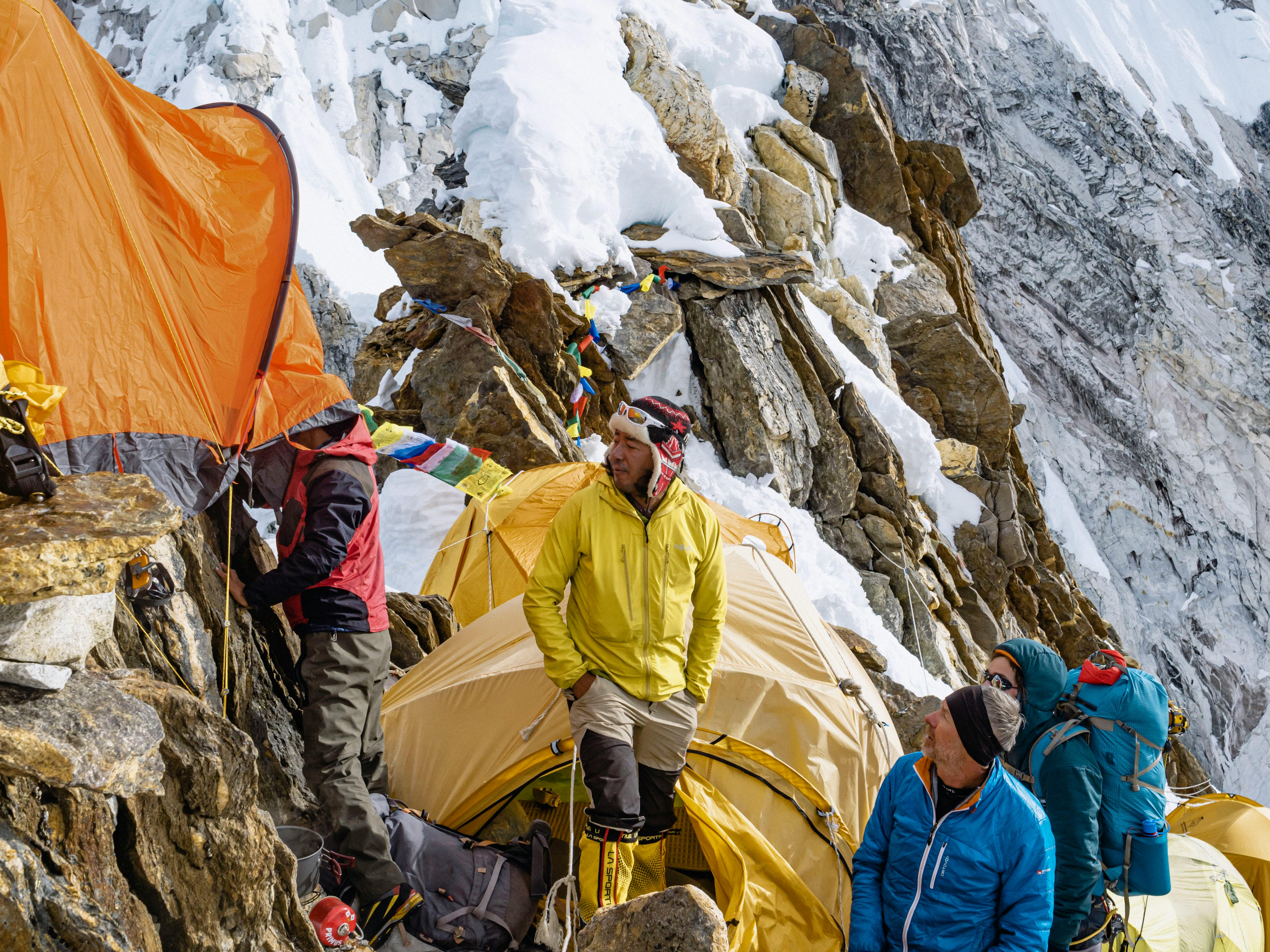
These insights prompt reflection on the type of high-altitude tourism we desire in the 21st century.
Forty percent of climbers who die on Everest are Nepalese guides or porters. This is one of the findings from EverData, a pioneering platform developed by The NeverRest Project that combines data visualization on tourism and sustainability on the Nepalese side of Mount Everest.
Among the available data—all from official sources such as the Government of Nepal, the Sagarmatha Pollution Control Committee (SPCC), or the Himalayan Database—the analysis of the number of fatalities on the world’s highest mountain above sea level is particularly noteworthy.
Between 1922 and 2023, 40.1% of recorded fatalities on Everest were Nepalese—a total of 132 individuals. Considering that those ascending the mountain are workers, whether guides, professionals fixing ropes or opening routes, or high-altitude porters, this fact prompts reflection on the type of high-altitude tourism we desire in the 21st century.

Following Nepalese nationals, the second-highest number of fatalities on Everest is from India (27 deaths, representing 8.2%); Japan (19 deaths, 5.7%); the UK (18 deaths, 5.4%); the USA (16 deaths, 4.8%); China (12 deaths, 3.6%); South Korea (10 deaths, 3%); Australia (9 deaths, 2.7%); and France (8 deaths, 2.4%), among other nationalities.
This technology also reveals the years with the highest number of fatalities, with 2023 being the deadliest (17 deaths), followed by 2014 (16 deaths), 2015 (15 deaths), and 1996 (14 deaths), according to EverData figures sourced from the Himalayan Database.

In a fragile environment like Everest, every number matters. Through EverData, we harness information to understand, preserve, and improve the balance between tourism and sustainability.
Data not only reflects reality but also provides us with the opportunity to act and protect Everest’s future. By offering insights into the effects of tourism on the environment, EverData aids in preserving the delicate balance between human exploration and natural conservation. These data-driven insights guide policy decisions, inform sustainable tourism practices, and empower communities, governments, and organizations to take informed action.
Try EverData yourself and discover more interesting facts about Everest here.